AD Program
- Ad Serving:
- Ad Servers: Software used by publishers to manage ad inventory, and by advertisers/agencies to host ad creatives, track performance, and deliver ads to websites and apps.
- Ad Tags: Snippets of code (often JavaScript or iFrames) placed on a publisher's website or app that call an ad server to fetch and display an ad.
- Programmatic Advertising Infrastructure: This is where a lot of the "programming" happens.
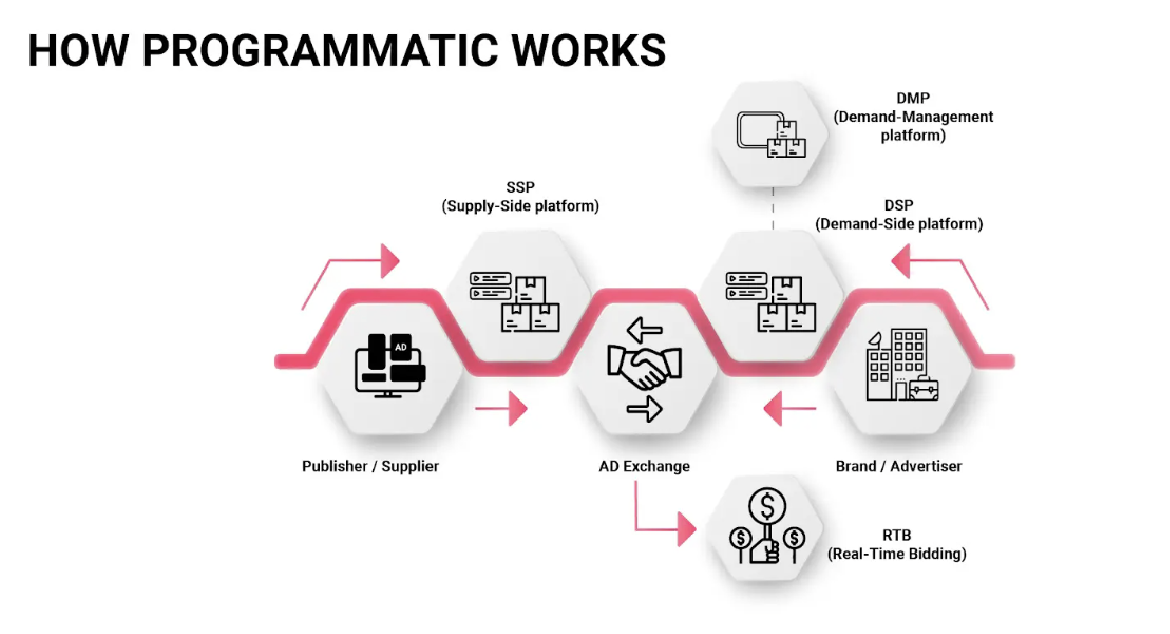
- Demand-Side Platforms (DSPs): Software used by advertisers to buy ad inventory across multiple ad exchanges and networks through automated, real-time bidding. They use algorithms to optimize bidding and targeting.
- Supply-Side Platforms (SSPs) / Ad Exchanges: Software used by publishers to make their ad inventory available to multiple DSPs, ad networks, and exchanges simultaneously, aiming to maximize revenue through automated auctions.
- Real-Time Bidding (RTB): The protocol and process by which ad impressions are bought and sold in real-time auctions (milliseconds) that occur as a user loads a webpage or app.
- Data Management Platforms (DMPs): Platforms that collect, organize, and activate large sets of first-party (advertiser's own), second-party (partner's), and third-party (aggregator's) audience data to improve ad targeting.
- Customer Data Platforms (CDPs): Similar to DMPs but typically more focused on unifying first-party customer data from multiple sources to create persistent, unified customer profiles.
- Ad Creative Development:
- HTML5 Ads: Modern interactive banner ads built using HTML, CSS, and JavaScript. This requires web development skills.
- Rich Media Ads: Ads with advanced features like video, audio, or other elements that encourage viewers to interact and engage.
- Dynamic Creative Optimization (DCO): Technology that automatically customizes ad creatives in real-time for different audiences, contexts, or performance data. For example, showing different product images or calls-to-action based on user behavior.
- Tracking and Measurement:
- Tracking Pixels/Tags: Snippets of code placed on websites (e.g., on a confirmation page after a purchase) to track conversions, user behavior, and retarget users.
- APIs (Application Programming Interfaces): Used extensively to connect different ad tech platforms, pull reporting data, automate campaign management tasks, and integrate with other marketing systems.
- SDKs (Software Development Kits): Used for in-app advertising, allowing mobile apps to integrate with ad networks and measurement partners.
- Automation and Optimization:
- Scripting: Using languages like Python or JavaScript to automate repetitive tasks in ad campaign management, reporting, or bid adjustments.
- Machine Learning & AI: Increasingly used in DSPs and other platforms for bid optimization, fraud detection, audience segmentation, and predictive analytics.